Your Wellness Program Isn't Competing Against Other Wellness Programs

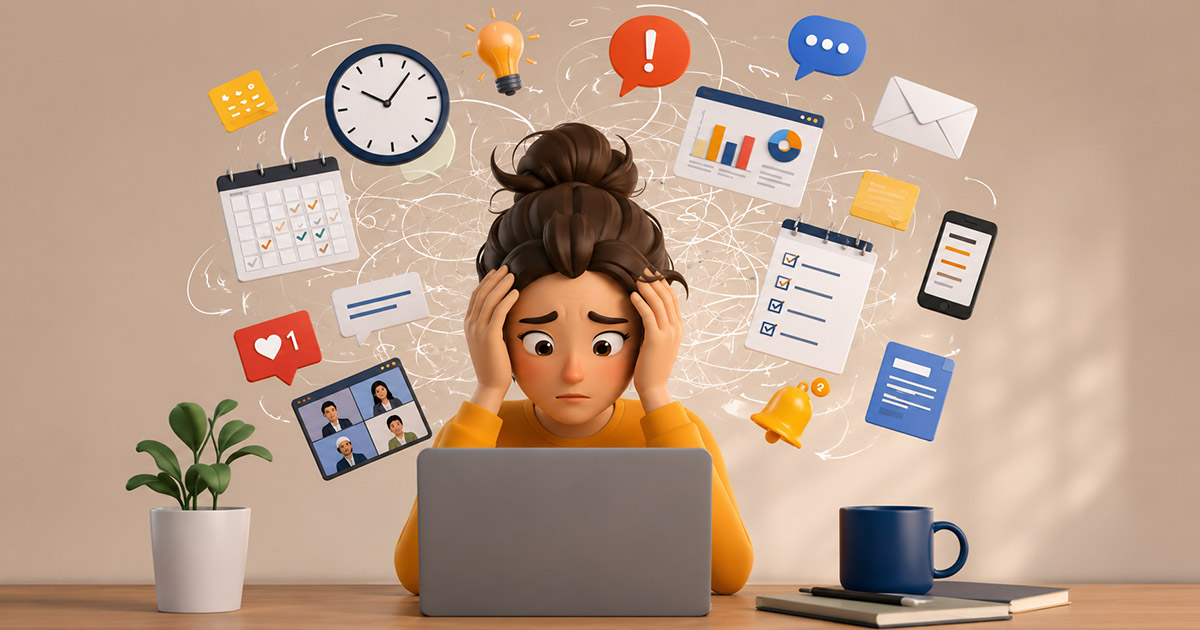
Illustration of an overwhelmed employee at a laptop surrounded by floating icons for calendars, video calls, emails, and notifications, representing digital distraction.

Many organizations believe their wellness platform competes with other wellness platforms. It doesn't.

Every morning, employees make hundreds of tiny decisions about where to spend their attention. Your wellness initiative isn't just competing with another health app. It's competing with overflowing inboxes, slack notifications, text messages, meetings, family responsibilities, streaming services, social media, fatigue and stress.

Attention has quietly become one of the world's most valuable resources. Every organization wants more of it, and every employee has less of it to give. That's why simply adding more health content/resources rarely increases engagement.

Employees don't disengage because organizations lack information. They disengage because participating feels like one more thing added to an already crowded day. The organizations seeing the greatest success are beginning to think differently.

Instead of asking:

"How can we provide more?"

They're asking:

"How can we make participation easier?"

The goal isn't to interrupt people's lives. It's to fit naturally into them.

The companies that win the future of employee engagement won't necessarily have the biggest libraries of content or the most resources. They'll be the ones that consistently earn a few moments of attention each day... and turn those moments into lasting habits.

In today's workplace, attention isn't just valuable. It's the beginning of every meaningful behavior change.
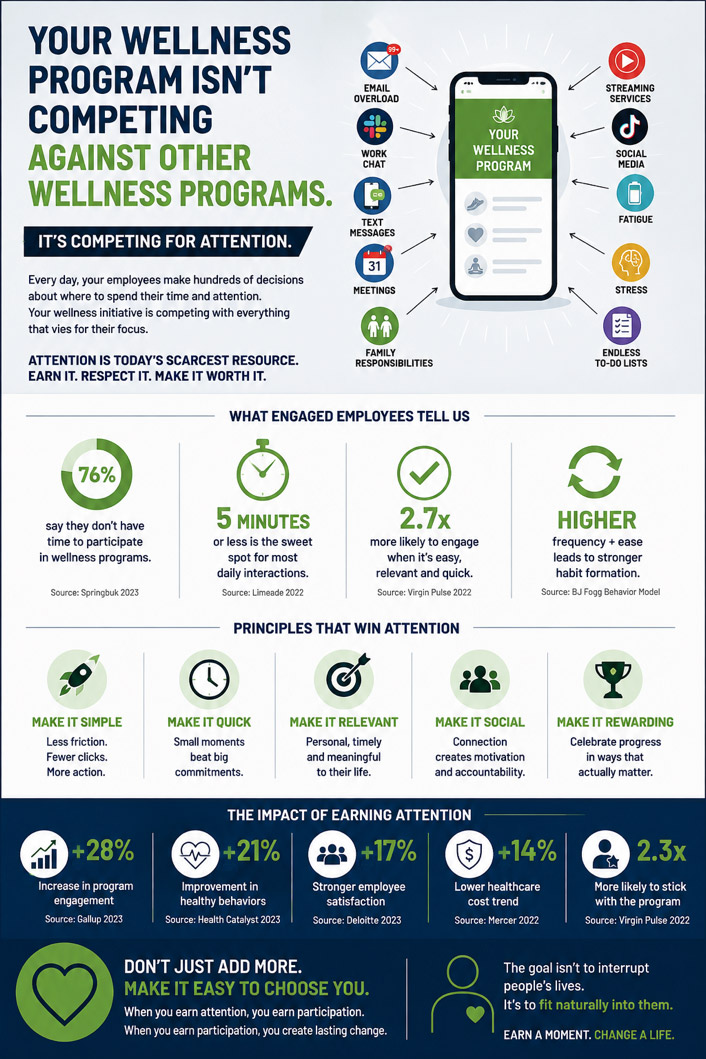
Infographic titled 'Your Wellness Program Isn't Competing Against Other Wellness Programs. It's Competing For Attention,' detailing statistics on micro-interactions, principles for capturing attention, and ROI metrics for participation.

Related Articles

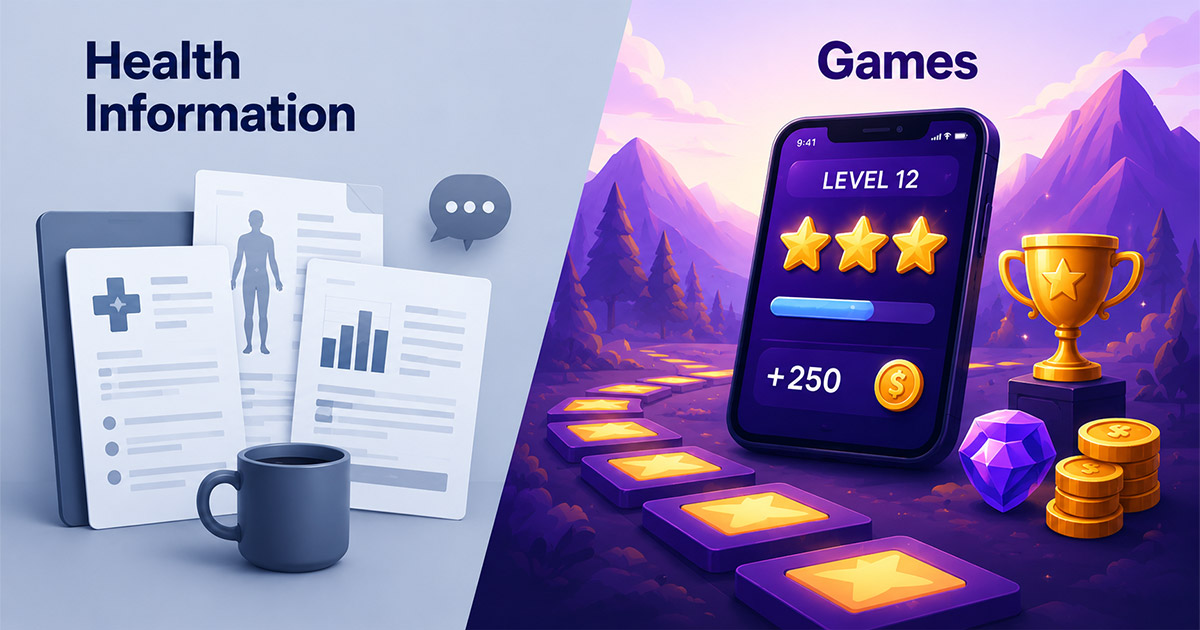
Split graphic comparing static medical reports and health information with an engaging, gamified smartphone reward experience.

Healthcare May Be Looking for Answers in the Wrong Industry

The gaming industry has spent decades learning how to keep people voluntarily engaged. Healthcare can apply many of the same principles—progress, rewards, social connection and purpose—to turn passive health experiences into sustained participation.

April 6, 2026 by Vigoroom
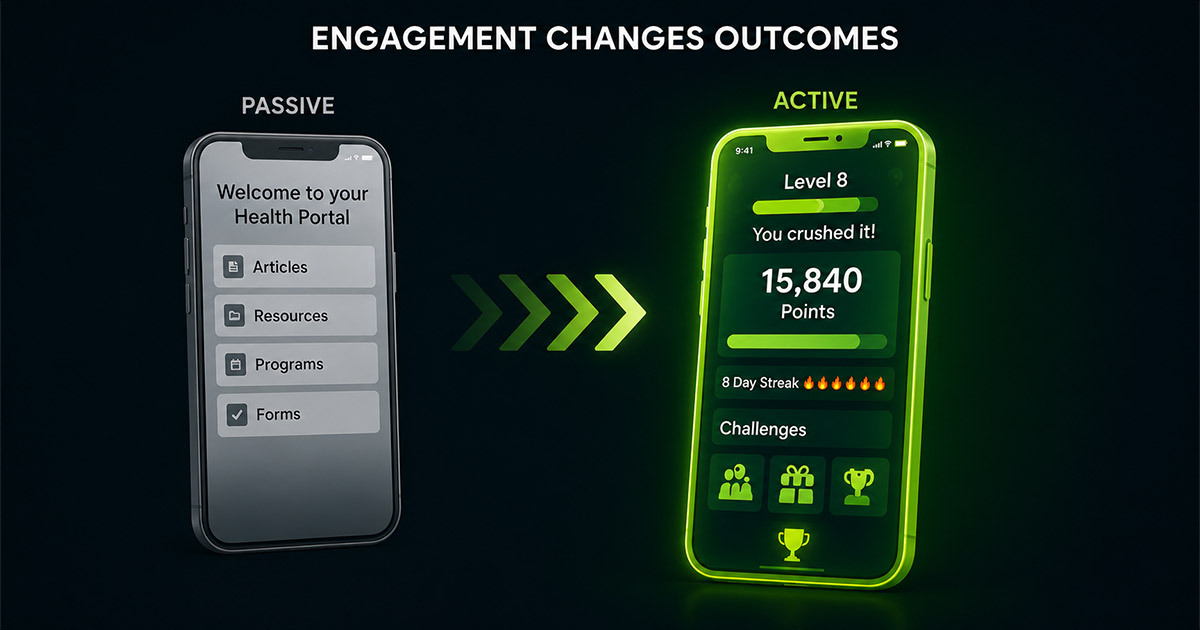
Comparison showing a transition from a passive health portal smartphone app to an active gamified app featuring point totals and streak tracking.

Insurance Carriers Don't Have a Data Problem. They Have an Engagement Problem.

Insurance carriers have more health data and digital tools than ever, yet sustained member participation remains elusive. The next opportunity is adding a behavioral activation layer that turns existing programs and data into continuous, measurable engagement.

April 20, 2026 by Vigoroom
Illustration of a stressed office worker at a laptop surrounded by distraction bubbles, paired with text about health getting deprioritized.

The Wellness Industry Has an Engagement Problem, Not a Content Problem

Why workplace wellness continues to struggle with participation despite an abundance of health content—and why sustained engagement, habit formation, and daily action matter more than adding more resources.

May 4, 2026 by Vigoroom
Back to Insights